
GHK-Cu
A copper-binding tripeptide complex used in laboratory research.
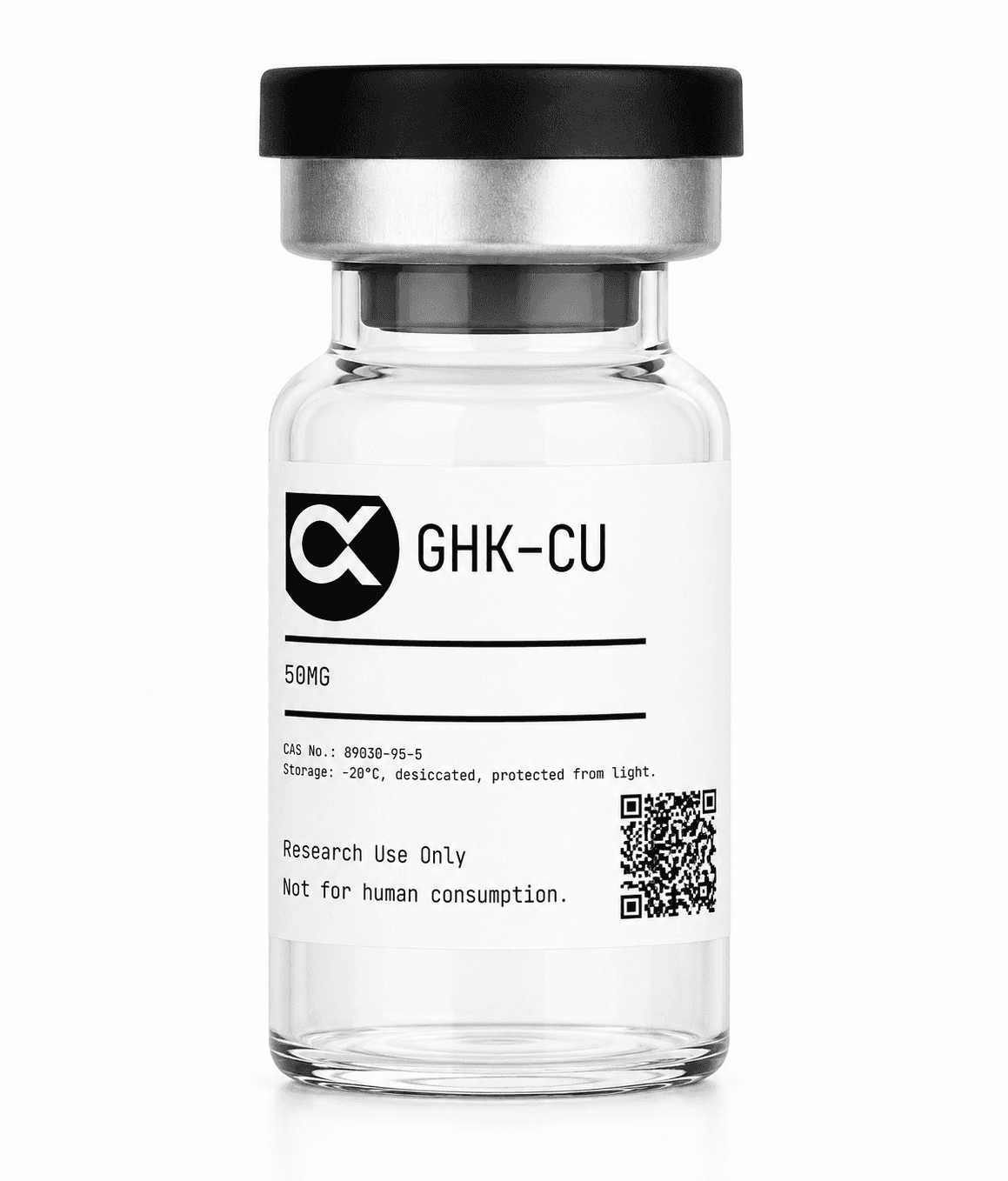
$89.99In stock
Buy 2+ · save 10% · $80.99 each
- Purity
- ≥ 99.6%
- Batch
- GHKCU-2605
- Tested
- 2026-05-12
- Lab
- Janoshik Analytical
- Ships in 1–2 business days, tracked
- Ships from the United States
- Card — secure hosted checkout
- Damaged or incorrect? Replaced or refunded
✓ Independently tested by Janoshik Analytical · 3 certificates published
Research Use Only — Not for human consumption
GHK-Cu is the tripeptide glycyl-L-histidyl-L-lysine complexed with copper(II), studied as a research reference material. Not for human or animal consumption.
- Class
- Research peptide
- CAS
- 89030-95-5
- Formula
- C14H24N6O4Cu
- Mass
- 403.9 g/mol
- Shipping
- Tracked, within the United States only. In-stock orders ship in 1–2 business days and a tracking number is emailed when it leaves. Flat $9.95, or free on orders over $200 — calculated at checkout. Shipping policy →
- Transit & cold-chain
- Lyophilized peptides are stable through standard ground transit and are packed to protect the product; temperature-sensitive items are packed accordingly. Refrigerate or freeze on arrival.
- Storage
- Store as labeled. Keep lyophilized material sealed, cold (typically −20 °C), and away from light and moisture; reconstituted solutions are less stable — refrigerate and use promptly. Requirements vary by compound, so follow the label and Certificate of Analysis.
- Returns & reship
- Research compounds are final-sale, but anything that arrives damaged or incorrect is replaced or refunded — email us within 7 days with photos. Returns & refunds →
- Payment
- Credit and debit cards, processed on a secure hosted checkout. You are redirected to our payment provider to pay — we never handle your full card details.
Topical short peptides that migrated from wound-healing research into cosmeceuticals.
- Argireline
Topical cosmetic peptide.
Tier B
- Matrixyl
Cosmetic peptide associated with collagen-signaling research.
Tier C
- AHK-Cu
Copper-tripeptide variant.
Tier D
Tiers rank how extensively a compound has been characterized in the literature, S (most) → F (sparse) — not quality or suitability. Research context only — not therapeutic claims. Family data: Peptide List — The Peptide Family Tree, CC BY 4.0.